
Umbral creativo
Estoy en un momento en el cual pongo mucha atención a los mensajes espontáneos de la vida. Hay palabras e imágenes simbólicas que despiertan mi curiosidad. A finales del 2022 la palabra umbral apareció mientras diseñaba un taller para trabajar cierres e inicios de ciclos en la vida desde nuestra naturaleza creativa.
Inspirada me emocioné con la idea de crear una serie de blogs, acerca de la creatividad en general. Empecé a hacer las entrevistas llena de ilusión y con gran deseos de aprender y compartir. Durante este proceso, la procrastinación y el agotamiento emocional me abrazaron por varios meses. No me sentía bien. ¿Quién no ha estado allí?
El proyecto quedó en estado latente invernante,necesitando la mirada tierna de la primavera. Mi deseo de expresarme acerca de la creatividad y el mundo interior fue mayor. Y así ha florecido esta serie de blogs que he decidido llamar Umbral creativo, son entrevistas con amigas artistas y creadoras desde su visión en relación a la creatividad y la espiritualidad, el juego y el storytelling. Las entrevistas son en inglés traducidas al español.
Para dar el primer paso en este umbral, comparto Creatividad, arte y el ser humano, una primera entrada de blog previa a las entrevistas donde comparto mi visión sobre la creatividad.
Creatividad, arte y el ser humano
El ser humano es intrínsecamente creativo: esta cualidad nos ha llevado como especie a adaptar y transformar nuestro propio mundo para satisfacer no solo nuestras necesidades físicas y encontrar soluciones a distintos problemas, sino también a indagar en cuestiones filosóficas de la vida.
Desde una perspectiva histórica, la creatividad ayudó a nuestros antepasados en las cavernas a sobrevivir y a comunicarse de diferente manera con su ambiente y los misterios del universo. La expresión artística ha acompañado a los humanos como vestigio de la necesidad de crear.
¿Y de qué sirve saber esto hoy en día? Recordar esta cualidad que compartimos comos seres humanos puede ayudarte a transformar tu entorno, con el potencial de transformar tu mundo interno.
Pinturas de ocre
En el año 2018 se encontró lo que pareciera ser la obra de arte más antigua del mundo, en un pedazo de piedra que parece ser un dibujo trazado con ocre, un pigmento natural de mineral terroso, hecho por el Homo Sapiens hace 76,000 años en una cueva en Sudáfrica. El nombre de esta pintura es G7bCCC-L13, o de cariño #L13.
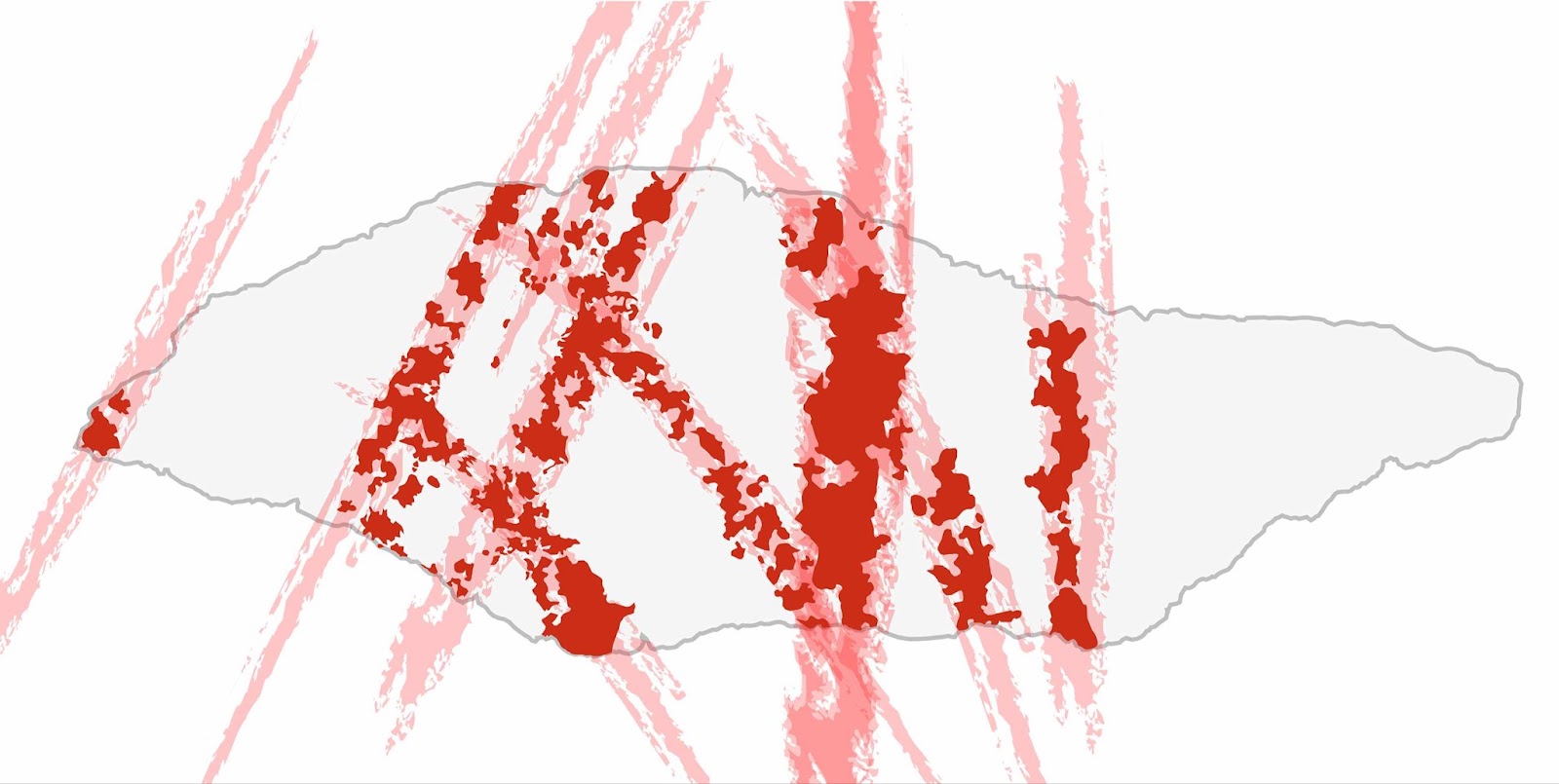
Figura 1: L13
Después de minuciosos estudios sobre este dibujo, suponen que se ha hecho con alguna finalidad. Karen van Niekerkuna, una de las arqueólogas que participó en el descubrimiento, puntualiza que la importancia de este hallazgo radica en el carácter de símbolo que tiene, y lo que ello significa para la humanidad. Vincula la capacidad de pensar simbólicamente del Homo Sapiens, junto con la capacidad humana de creación como la cuna de la transmisión cultural dentro de lo cual se incluye la lengua, matemáticas, religión etc. Estas observaciones apoyan la hipótesis de que los dibujos como el L13 y otros grabados en piedra encontrados en la misma zona arqueológica con signos similares, fueron usados por estos Homos Sapiens africanos como una expresión de un “aspecto inherente de su mundo espiritual” (van Niekerkuna, 2018).
La muestra de esta creatividad traza también una búsqueda de conexión entre lo físico (relación cuerpo y ambiente), lo mental (transmisión de ideas y cultura), y lo espiritual (el alma). Una de las maneras en que la creatividad humana se expresa es a través del arte. L13 puede ser una de las primeras muestras de expresión artística en el Homo Sapiens, un dibujo, unos trazos que simbólicamente acompañan nuestro deseo de crear arte.
Me pregunto e imagino todo el arte efímero creado por nuestros antepasados: qué materiales de la naturaleza usarían para crear belleza diferente de la ya existente. Expresar algo mucho más profundo de lo que veían, expresar su interior.
El instinto nato de los seres humanos de crear y sentir artísticamente es tan profundo que lo podemos ver desde muy temprana edad. Los bebés y niños responden intuitiva e inconscientemente a los estímulos y expresiones artísticas que los rodean. Se mueven al escuchar música, expresan interés por obras estéticas especialmente con color, les gusta explorar materiales artísticos, quieren reproducir sonidos y música, les interesan las palabras y quieren aprenderlas. Todo esto es un ejemplo de nuestra capacidad creativa. Desde la infancia la expresión artística libre nos provee de historias, disfrute y bienestar. El conectarse con la creatividad a través del arte, es conectarse profundamente con la posibilidad inmensa de la creación de un mundo nuevo, abierto a ser explorado. La humanidad recibe miles de vidas nuevas todos los días con este potencial creativo. Por consecuencia estamos siempre siendo parte de procesos creativos, que contienen el potencial de transformar al mundo, dando lugar a una humanidad más sana, y más justa.
La Terapia de Artes Expresivas ofrece espacios de creación conectados con los más íntimos sentires de la persona, donde acceder a su esencia creativa, poniendo siempre el foco en el potencial de conectarse con lo vital. Acoge al ser humano de manera completa desde un todo, desde un cuerpalma. Resignificar historias desde el arte, conecta con esta necesidad básica de crear que el ser humano ha utilizado no solo para sobrevivir, sino también para sanar y crear belleza. Crear, creatividad y creación, la misma raíz. Reconociendo la danza del corazón creativo desde tiempos inmemoriales.
Gracias por ser parte de Umbral creativo. Esta es una serie de blogs relacionados con la creatividad, que darán forma e inspirarán la sesión grupal UMBRAL que se llevará a cabo en diciembre del 2023. Esta sesión está inspirada en los ciclos creativos, la alquimia artística innata al ser humano, y su influencia en los procesos de desarrollo personal y bienestar.
VAN NIEKERK, K. (2018). #L13 – The earliest drawing sheds light on the origin of symbolism. Bergen, Noruega: Ecology & evolution recuperado de https://natureecoevocommunity.nature.com/users/175937-karen-van- niekerk/posts/38511-the-earliest-drawing-sheds-light-on-the-origin-of-symbolism Fecha de consulta abril 2020
Creative Threshold
I am currently at a moment in which I pay close attention to the spontaneous messages of life. There are symbolic words and images that awaken my curiosity. At the end of 2022, the word “threshold” appeared while I was designing a workshop to work on closures and beginnings of cycles in life from our creative nature.
Inspired, I became excited about the idea of creating a series of blogs about creativity in general. I started conducting interviews filled with enthusiasm and a great desire to learn and share. During this process, procrastination and emotional exhaustion embraced me for several months. I didn’t feel well. Who hasn’t been there?
The project remained in a dormant state, needing the tender gaze of spring. My desire to express myself about creativity and the inner world was greater. And so, this series of blogs that I have decided to call “Creative Threshold” has blossomed. They are interviews with artist friends and creators from their perspective on creativity and spirituality, play, and storytelling. The interviews are in English and translated into Spanish.
To take the first step in this threshold, I share “Creativity, Art, and the Human Being,” a preliminary blog entry before the interviews where I share my vision on creativity.
Creativity, Art, and the Human Being
Human beings are inherently creative: this quality has led us as a species to adapt and transform our own world, not only to meet our physical needs and find solutions to different problems, but also to delve into philosophical questions of life.
From a historical perspective, creativity helped our cave-dwelling ancestors survive and communicate in different ways with their environment and the mysteries of the universe. Artistic expression has accompanied humans as evidence of the need to create.
And what is the use of knowing this today? Remembering this quality that we share as human beings can help you transform your surroundings, with the potential to transform your inner world.
Ochre Paintings
In 2018, what appears to be the oldest artwork in the world was found on a piece of stone, seemingly a drawing made with ochre, a natural pigment made of earthy minerals, created by Homo sapiens 76,000 years ago in a cave in South Africa. The name of this painting is G7bCCC-L13, or affectionately known as #L13.
Figure 1: L13
After meticulous studies of this drawing, it is presumed to have been made for a purpose. Karen van Niekerkuna, one of the archaeologists involved in the discovery, emphasizes the importance of this finding lies in its symbolic nature and what it means for humanity. She links the Homo sapiens’ capacity for symbolic thinking, along with the human capacity for creation, as the cradle of cultural transmission, which includes language, mathematics, religion, etc. These observations support the hypothesis that drawings like L13 and other stone engravings found in the same archaeological area with similar signs were used by these African Homo sapiens as an expression of an “inherent aspect of their spiritual world” (van Niekerkuna, 2018).
The display of this creativity also traces a search for connection between the physical (body-environment relationship), the mental (transmission of ideas and culture), and the spiritual (the soul). One of the ways in which human creativity is expressed is through art. L13 may be one of the first examples of artistic expression in Homo sapiens, a drawing, strokes that symbolically accompany our desire to create art.
I wonder and imagine all the ephemeral art created by our ancestors: what natural materials would they use to create beauty different from what already existed? To express something much deeper than what they saw, to express their inner selves.
The innate instinct of human beings to create and experience art is so deep that we can see it from a very early age. Babies and children intuitively and unconsciously respond to the artistic stimuli and expressions around them. They move when they hear music, show interest in aesthetic works, especially those with color, enjoy exploring artistic materials, want to reproduce sounds and music, are interested in words and want to learn them. All of this is an example of our creative capacity. From childhood, free artistic expression provides us with stories, enjoyment, and well-being. Connecting with creativity through art is deeply connecting with the immense possibility of creating a new world, open to exploration. Humanity receives thousands of new lives every day with this creative potential. Consequently, we are always part of creative processes that have the potential to transform the world, giving rise to a healthier and more just humanity.
Expressive Arts Therapy offers spaces for creation connected to the most intimate feelings of the individual, where one can access their creative essence, always focusing on the potential to connect with vitality. It embraces the human being holistically, as a whole, as a body-soul. Reinterpreting stories through art connects with this basic need to create that human beings have used not only to survive but also to heal and create beauty. Create, creativity, and creation, the same root. Recognizing the dance of the creative heart since time immemorial.
Thank you for being part of Creative Threshold. This is a series of blogs related to creativity that will shape and inspire the UMBRAL group session taking place in December 2023. This session is inspired by creative cycles, the innate artistic alchemy of the human being, and its influence on personal development and well-being processes.

 Colibrí Arteterapia